

Swimming pools naturally lose small amounts of water over time. Warm weather, wind and heavy use can all contribute to evaporation. However, when the water level drops more quickly than expected, or you find yourself topping it up regularly without explanation, a leak may be the cause.
For homeowners and commercial properties across the North West, swimming pool leaks can be particularly frustrating. The source is rarely visible, and because pools involve multiple systems including pipework, filtration units and structural shells, identifying the problem can feel overwhelming.
At North West Leak Detection, we approach swimming pool leak detection methodically. The key is separating normal water loss from structural or plumbing failure before any invasive work begins.
Understanding Normal Evaporation
Before assuming a leak, it is important to consider natural evaporation. Outdoor pools can lose several millimetres of water per day depending on weather conditions. High temperatures, low humidity and strong winds accelerate this process.
Heated indoor pools may also experience evaporation, particularly if ventilation systems are not balanced correctly.
The difference between evaporation and a leak is consistency. Evaporation tends to be steady and influenced by climate. A leak often produces a more rapid or irregular drop in water level, sometimes accompanied by damp areas around the pool structure.
Monitoring the pattern is the first step in identifying whether further investigation is required.
The Bucket Test: A Simple First Check
One of the most straightforward ways to assess water loss is the bucket test.
A bucket filled with pool water is placed on a pool step so that the water level inside the bucket matches the level outside. Both levels are marked and left for twenty-four hours.
If the pool water drops significantly more than the water inside the bucket, it suggests water loss beyond evaporation.
While this test does not reveal the source, it confirms whether professional investigation is necessary.
Checking the Pool Surroundings

Visible signs around the pool area can also provide clues. Persistent damp patches on surrounding paving, soft ground near the structure or cracks forming in concrete can indicate underground water escape.
If the water level consistently drops to a specific height and then stabilises, this may suggest the leak is located at that level within the pool wall or fitting.
Careful observation often narrows down the likely area before diagnostic equipment is used.
Plumbing System vs Structural Leak
Swimming pools contain two main areas where leaks can occur. The first is the plumbing system, including return lines, suction lines and filtration equipment. The second is the pool shell itself, including liner, concrete or fibreglass surfaces.
Distinguishing between these two is essential because the repair approach differs significantly.
If water loss continues even when the circulation system is switched off, this often indicates a structural issue rather than a pressure line failure.
Conversely, if the leak appears only when the pump is running, pipework or fittings may be responsible.
Accurate testing ensures that investigation remains targeted.
Acoustic Leak Detection in Pool Systems
Pressurised pipework within swimming pool systems can be assessed using acoustic leak detection.
When water escapes under pressure, it produces vibration and sound waves. Using sensitive listening equipment, we trace underground pool pipe routes and identify areas of increased acoustic intensity.
This allows us to pinpoint leaks beneath patios, landscaped areas or concrete slabs without extensive excavation.
Instead of digging along the entire pipe run, we identify one confirmed location.
Tracer Gas Testing for Underground Pool Pipes
In cases where pipework is buried deeply or acoustic signals are difficult to isolate, tracer gas detection becomes particularly effective.
A safe, inert gas is introduced into the pool pipe system. Because the gas molecules are extremely small, they escape through even minor defects.
Specialist detection equipment is then used above ground to locate where the gas emerges. This method is highly accurate and minimises disruption.
Tracer gas is especially useful for detecting leaks beneath hard surfaces such as driveways or tiled pool surrounds.
Dye Testing for Structural Leaks
If a structural issue is suspected within the pool shell, dye testing can help identify small cracks or fitting failures.
A coloured dye is released near suspected areas while the pool remains still. If a crack or opening is present, the dye is drawn towards it by water movement.
This simple but effective method can reveal leaks around lights, skimmers, drains or wall fittings.
Dye testing is often used in combination with other diagnostic tools to confirm findings.
Identifying Leaks in Pool Liners
Vinyl liner pools can develop small tears or punctures over time. These defects may be difficult to see with the naked eye.
Careful inspection along seams, corners and high-stress areas is necessary. If the liner has pulled away from fittings or steps, water may escape behind the surface.
Pinpointing liner damage early prevents further deterioration and limits water loss.
Detecting Leaks in Concrete or Fibreglass Pools
Concrete and fibreglass pools can develop structural cracks due to ground movement, temperature fluctuation or settlement.
While some surface cracks are cosmetic, others may allow water to escape.
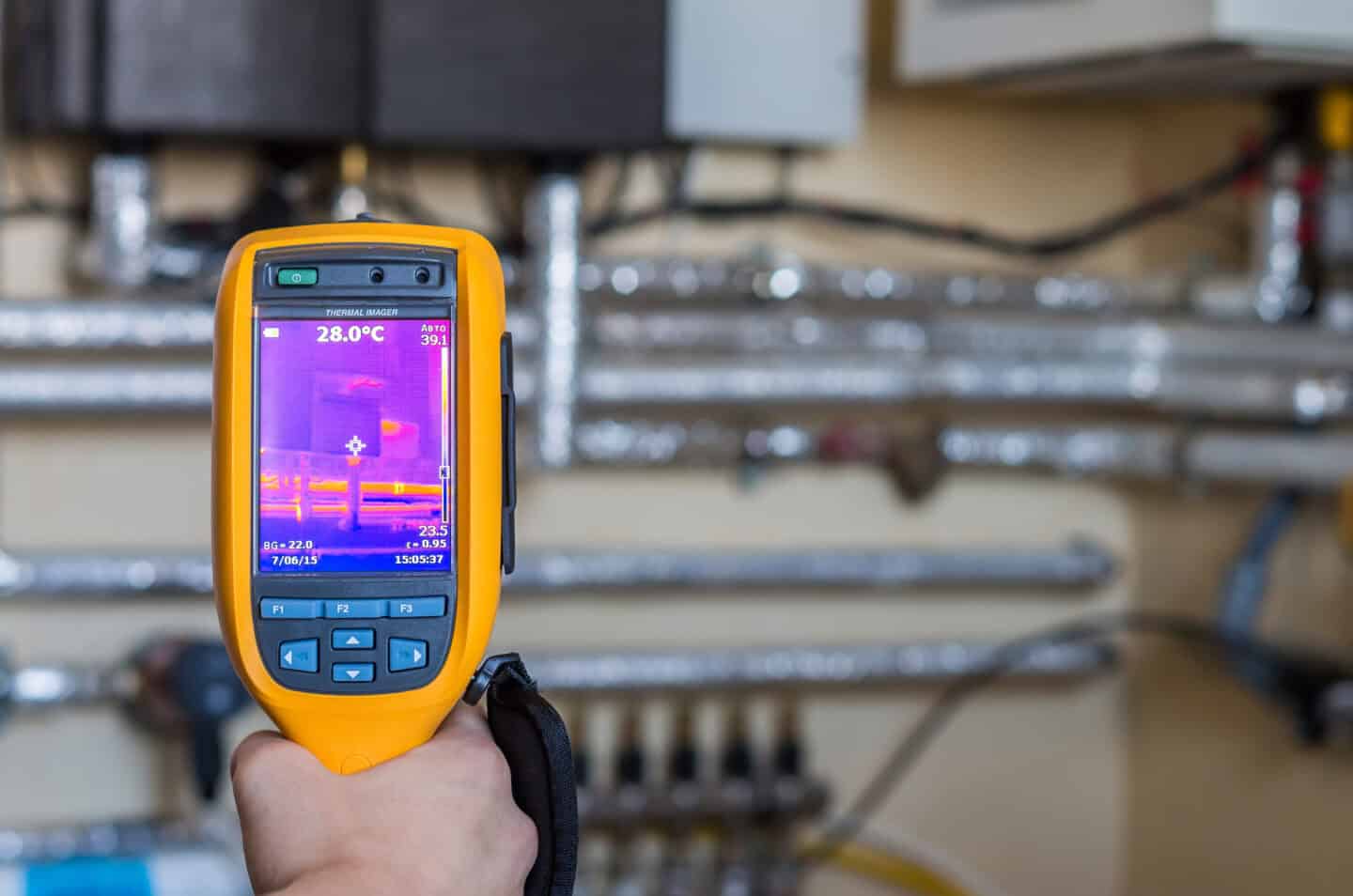
Thermal imaging can sometimes assist in identifying moisture differences within surrounding surfaces. Combined with visual inspection and pressure testing, this builds a clearer understanding of the problem.
Professional assessment avoids unnecessary structural excavation.
The Importance of Pressure Testing
Pressure testing is a key step in swimming pool leak detection. Individual pipe lines are isolated and pressurised to confirm whether they hold consistent pressure over time.
If pressure drops during testing, this confirms a plumbing-related leak. Once identified, acoustic or tracer gas methods refine the exact location.
This systematic approach ensures that we do not confuse plumbing failures with structural defects.
Why Guesswork Is Costly
Without professional detection, pool owners may attempt exploratory digging around suspected pipe routes. This can lead to damaged paving, unnecessary repair work and additional expense.
Because pool pipe layouts are often complex and undocumented, digging without confirmation risks missing the actual leak location entirely.
Modern leak detection eliminates guesswork. By confirming the precise source before excavation, disruption remains minimal.
Commercial Pool Leak Detection
Commercial pools in hotels, leisure centres and gyms face additional challenges. Water loss can affect operating costs significantly, particularly where heating and chemical treatment are involved.
Leak detection in these environments must be efficient to minimise downtime.
Non-invasive methods allow investigation to take place without closing entire facilities unnecessarily.
Accurate diagnosis supports timely repair and cost control.
When to Call a Specialist
If your pool requires frequent topping up, the water level drops rapidly or surrounding areas show signs of moisture, it is time to seek professional assessment.
Delaying investigation can increase water bills, weaken structural integrity and create ground instability around the pool.
Early intervention limits both water waste and repair scope.
At North West Leak Detection, we use a combination of acoustic listening, tracer gas testing, dye testing and pressure diagnostics to identify swimming pool leaks accurately.
Bringing It All Together
Detecting a swimming pool leak begins with observation. Monitoring water levels, performing simple evaporation checks and noting environmental changes provide initial clues.
However, confirming the exact source requires specialist equipment and expertise.
By using non-invasive diagnostic methods rather than destructive digging, leaks can be pinpointed with precision. Whether the issue lies in underground pipework, structural cracks or faulty fittings, accurate detection ensures targeted repair.
For pool owners across the North West, the goal is straightforward. Identify the leak quickly, minimise disruption and restore water levels without unnecessary damage.
When water loss becomes persistent, professional leak detection provides clarity and confidence.