

Water has a frustrating habit of travelling. A pipe can leak in one location, yet the visible damage may appear several metres away. Stains on ceilings, damp patches on walls or pooling water outside are often just the symptoms. The source is usually hidden beneath floors, inside walls or underground.
At North West Leak Detection, we regularly attend properties across Liverpool and the wider North West where homeowners or businesses have already had exploratory work carried out without success. Floors have been lifted, walls opened and gardens dug up, only for the leak to remain elusive.
This is where modern leak detection methods, particularly acoustic leak detection, change everything. Instead of guessing where the leak might be, we use specialist equipment to listen for it.
What Is Acoustic Leak Detection?
Acoustic leak detection is a non-invasive method used to locate hidden water leaks by listening to the sound that escaping water makes under pressure.
When a pipe develops a crack or joint failure, pressurised water forces its way through the opening. As it escapes, it creates vibrations and distinct noise patterns. These sounds travel through the pipe material and into surrounding surfaces such as soil, concrete or floor screed.
To the human ear, these sounds are often too faint or distorted to identify clearly. However, with highly sensitive listening equipment and amplification devices, trained engineers can isolate and interpret them.
In simple terms, acoustic leak detection works by turning invisible water movement into something we can hear and measure.
Why Water Leaks Make Noise
It might seem surprising that a small leak creates enough sound to be detected. The key factor is pressure.
Most domestic and commercial plumbing systems operate under consistent water pressure. When that pressure meets a weakness in the pipe, the escaping water creates turbulence. Turbulent flow generates vibration. Vibration produces sound waves.
The sound of a leak differs depending on several factors. The pipe material, the size of the hole, the water pressure and the surrounding ground conditions all influence the frequency and intensity of the noise.
For example, a leak in a copper pipe beneath a tiled floor produces a different acoustic signature compared to a plastic mains pipe buried under a lawn.
Understanding these variations is part of the skill involved in acoustic detection.
How Acoustic Leak Detection Equipment Works
The equipment we use is designed to amplify and filter specific sound frequencies. Ground microphones, listening discs and electronic sensors are placed strategically along pipe runs.
These devices pick up vibrations from the pipe and surrounding surfaces. The signals are then transmitted to headphones and digital analysers, allowing our engineers to identify patterns associated with active leaks.
Advanced units can filter out background noise such as traffic, footfall or general building sounds. This is particularly important in busy environments where interference could otherwise mask the leak.
Rather than randomly opening up areas, we move systematically along the suspected pipe route, narrowing down the loudest point until we pinpoint the exact location.
The Step-by-Step Acoustic Detection Process
When we arrive at a property, the first stage is always assessment. We gather information about the symptoms, review the plumbing layout where possible and isolate sections of the system if required.
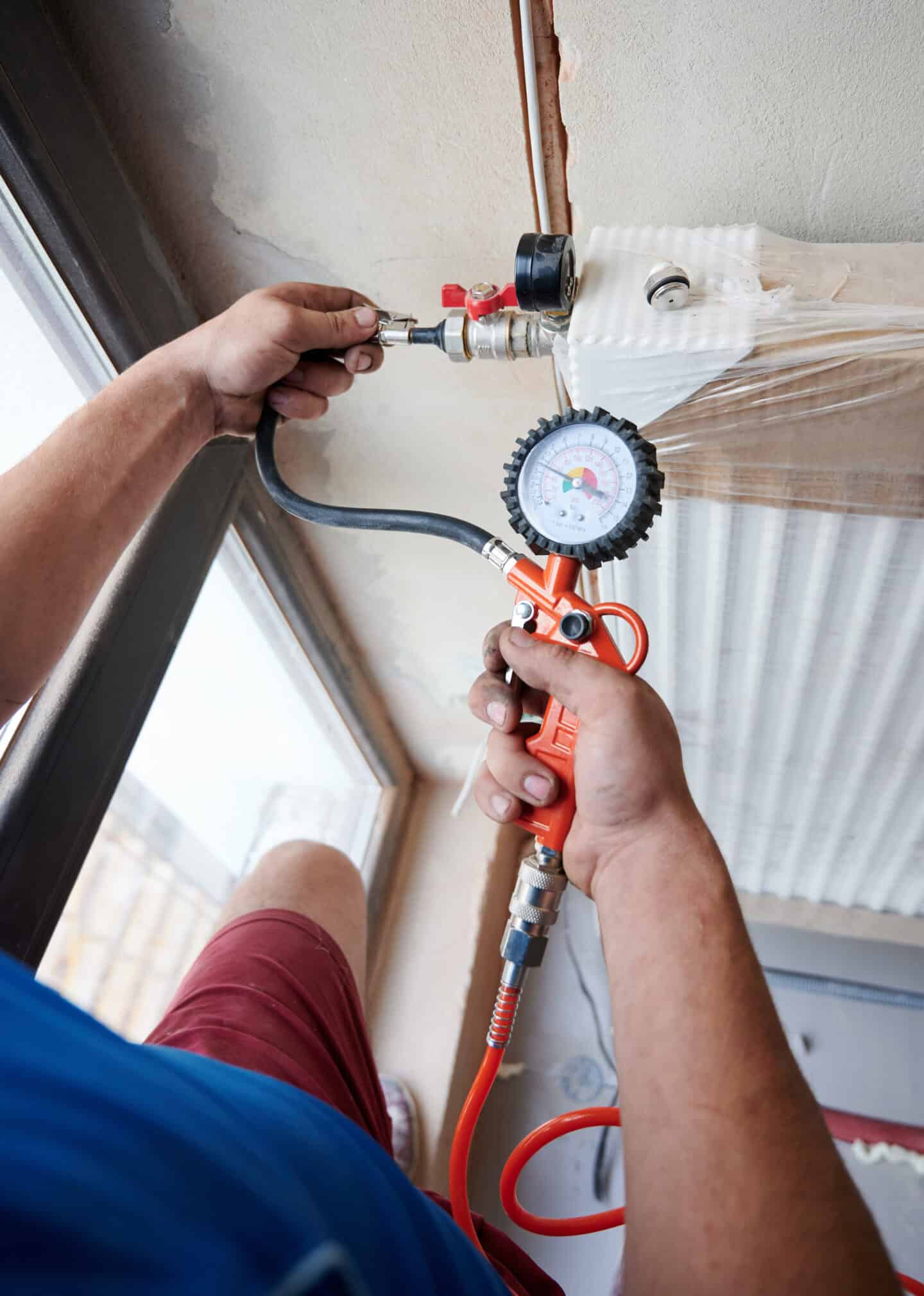
In many cases, we confirm that there is an active leak before starting acoustic tracing. This might involve pressure testing or checking water meter movement.
Once confirmed, we begin placing listening equipment at accessible points. Stop taps, external valves and exposed pipework provide useful starting locations.
As we move along the line, we compare sound intensity levels. The leak typically produces the strongest signal closest to its source. By triangulating these readings, we identify the most probable location.
This approach dramatically reduces unnecessary disruption.
Why Acoustic Detection Is Non-Invasive
Traditional leak finding methods often relied on guesswork. If a damp patch appeared in a kitchen ceiling, the assumption might be that the leak was directly above. Sections of flooring would be removed in stages until the problem was found.
Acoustic detection removes that uncertainty. Instead of opening multiple areas, we target one precise point.
This means fewer damaged tiles, less disturbed flooring and minimal excavation. For businesses, it also reduces downtime. For homeowners, it reduces stress and repair costs.
The non-invasive nature of acoustic detection is one of the main reasons it has become a preferred method in modern leak investigation.
When Acoustic Detection Works Best
Acoustic methods are particularly effective on pressurised water systems. Mains water pipes, central heating systems and certain underground supply lines are ideal candidates.
Leaks beneath concrete floors, driveways or paved areas are often located using acoustic listening combined with other supporting techniques.
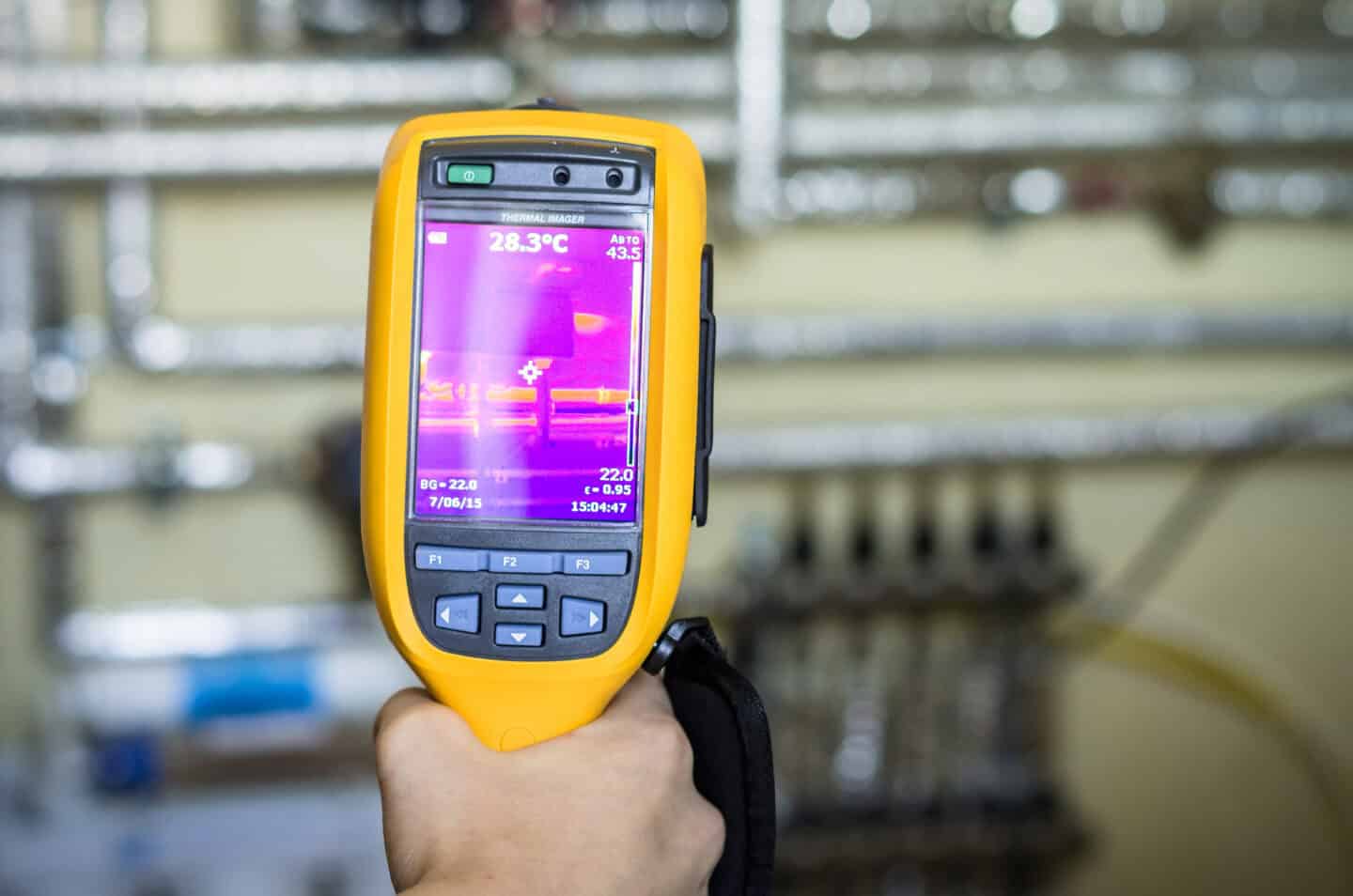
However, acoustic detection is not always used in isolation. In some scenarios, we combine it with thermal imaging or tracer gas methods to confirm findings. Each property is different, and part of our job is choosing the most appropriate approach.
Challenges Acoustic Detection Overcomes
One of the most common frustrations property owners face is recurring damp without visible pipe damage. Water may be travelling beneath floor screed or through cavity walls.
Acoustic detection allows us to investigate these hidden pathways without causing unnecessary structural damage.
In commercial settings such as retail units or offices, lifting large floor areas can be disruptive and costly. Pinpoint accuracy avoids extensive remedial work.
For older properties across the North West, where pipework layouts are not always straightforward, acoustic methods provide clarity where documentation may be lacking.
Why Experience Matters
Although the technology is advanced, the interpretation of sound still relies heavily on training and experience.
Different background noises can mimic leak sounds. Flowing water in neighbouring properties, heating systems cycling on and off, or even environmental vibrations can complicate readings.
Experienced engineers understand how to differentiate between consistent leak signatures and intermittent background noise.
At North West Leak Detection, our engineers are trained in recognising frequency patterns and adapting techniques to suit the environment. Equipment is only as effective as the person using it.
How Acoustic Detection Helps with Insurance Claims
Many property owners contact us after noticing unexplained water damage. In these cases, insurance providers often require evidence of trace and access.
Accurate identification of the leak source allows for clear reporting. Insurers typically need confirmation of the cause and precise location before approving repair works.
By pinpointing the leak with minimal disruption, acoustic detection supports structured repair plans and reduces overall claim costs.
This benefits both the property owner and the insurer by preventing unnecessary exploratory damage.
Limitations and Realistic Expectations

While acoustic leak detection is highly effective, it is important to set realistic expectations.
Very small leaks with extremely low pressure may produce faint signals. In these cases, supplementary methods may be required.
Similarly, heavily insulated pipework or certain ground conditions can dampen sound transmission.
Our role is not simply to use one technique but to assess each situation individually. Acoustic detection is often the starting point because of its efficiency and minimal disruption, but it is part of a broader toolkit.
Why Early Detection Saves Money
The longer a leak remains undetected, the more secondary damage it can cause. Water can weaken timber, damage plaster, undermine foundations and encourage mould growth.
Acoustic detection allows us to intervene early. By locating the leak quickly, repair costs are contained to the affected pipe section rather than extended structural damage.
In commercial environments, early intervention can prevent operational disruption and reputational damage.
From a financial perspective, accurate detection is always more cost-effective than prolonged investigation.
Acoustic Detection in Underground Leaks
Underground leaks are particularly challenging because the damage is rarely visible until significant water loss has occurred.
A constantly moving water meter, damp soil patches or unexplained drops in pressure often indicate underground issues.
Acoustic ground microphones allow us to listen through soil, tarmac and paving. By scanning systematically, we identify the loudest acoustic response.
This avoids unnecessary excavation across large areas. Instead of digging trenches in multiple locations, excavation is limited to one confirmed point.
For homeowners, this preserves gardens and driveways. For commercial sites, it prevents widespread disruption.
The Human Element Behind the Technology
It is easy to focus solely on equipment, but leak detection remains a service built on communication and trust.
When we attend a property, we understand that customers are often stressed. Rising water bills, visible damp or insurance complications can create anxiety.
Explaining acoustic detection in simple terms reassures property owners. They understand that we are not guessing. We are following measurable sound patterns.
Clear communication throughout the process builds confidence in the outcome.
Why Acoustic Leak Detection Is a Smarter Approach
In the past, leak detection often meant destruction first and confirmation later. Walls were opened, floors lifted and trenches dug without certainty.
Acoustic methods reverse that approach. We confirm first, then open only where necessary.
This smarter approach aligns with modern expectations of efficiency and minimal disruption.
It also reflects the wider shift within the industry towards advanced diagnostic methods rather than traditional trial-and-error techniques.
Bringing It All Together
So what does acoustic leak detection really mean in simple terms?
It means listening for the sound of escaping water instead of tearing apart your property to find it. It means using sensitive equipment to amplify hidden vibrations. It means identifying the exact source of a problem rather than working through elimination.
For homeowners and businesses across Liverpool and the North West, it represents a faster, cleaner and more cost-effective way to solve a frustrating problem.
At North West Leak Detection, acoustic leak detection is one of the core tools we rely on because it delivers clarity. When used correctly and interpreted by experienced engineers, it transforms leak investigation from guesswork into precision.
And when water damage is involved, precision makes all the difference.